ESX vs QBCore vs QBOX: Technical Framework Comparison 2026
Choosing a framework is the single most consequential decision when building a FiveM server. It determines which scripts you can use, how your developers write code, the…
Introduction
Choosing a framework is the single most consequential decision when building a FiveM server. It determines which scripts you can use, how your developers write code, the performance ceiling of your server, and the long-term maintainability of your stack. In 2026, three frameworks dominate the scene: ESX Legacy, QBCore, and QBox. Each has distinct strengths, trade-offs, and ideal use cases.
This is a technical comparison — not a popularity contest. We'll cover architecture, API design, performance, ecosystem maturity, and future trajectory. By the end, you'll have a clear picture of which framework fits your specific situation.
After choosing a framework, move into the matching commercial paths: for QBCore servers, the broader for category planning, for discounted multi-script stacks, and the for individual products.
Framework Origins and Philosophy
ESX Legacy
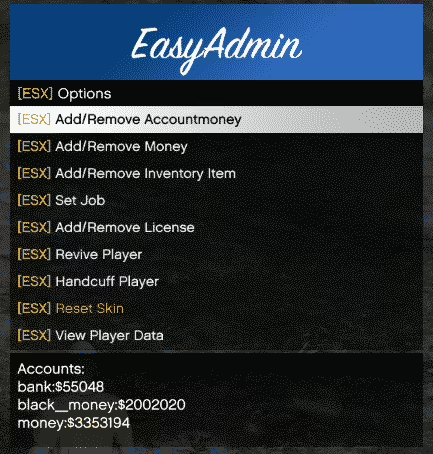
ESX (EssentialMode Extended) is the oldest of the three, originally released around 2017. is the community-maintained fork that replaced the original abandoned version. Its design philosophy prioritizes broad compatibility and simplicity — tend to be straightforward, server-authoritative, and easy to modify even for beginner developers.
ESX operates on a job-grade system where every player has a job and a grade within that job. This model maps cleanly onto traditional RP server structures and has been refined over years of community contributions. The GitHub repository for ESX Legacy is available at github.com/esx-framework/esx_core.
QBCore
QBCore launched in 2020 as a modern alternative to ESX. It introduced a more opinionated architecture, a built-in inventory system, a player data model centered on citizen IDs, and a resource structure that encouraged consistent patterns across scripts. QBCore grew rapidly due to its active community, large free script library, and the perception that it represented a cleaner codebase.
QBCore's philosophy is cohesion — scripts are expected to follow shared patterns, use shared exports, and integrate with the core player data object. The tradeoff is a steeper learning curve for developers coming from ESX or standalone scripting.
Häufig gestellte Fragen
Can I use QBCore scripts on a QBox server?
Many QBCore scripts work on QBox with minor modifications, since QBox is a fork. The main changes needed are updating import paths and replacing qb-specific UI calls with ox lib equivalents. Check each script's GitHub issues for QBox compatibility notes before migrating.
Is ESX dead in 2026?
No. ESX Legacy remains actively maintained and has the largest installed base of any FiveM framework. Thousands of servers run ESX successfully in 2026. It's not the most modern choice for new projects, but it is far from dead.
Does the framework choice affect player-facing experience?
Directly, less than you'd think — players experience the scripts built on the framework, not the framework itself. Indirectly, framework choice affects which scripts you can install, how polished those scripts are, and server performance under load — all of which players notice.