FiveM HUD Scripts Troubleshooting FAQ: 12 Common Issues Fixed
When a HUD script breaks on your FiveM server, every player sees it within seconds. This guide walks through the 12 most common HUD failures — invisible HUDs, broken speedometers, framework mismatches, FPS drops — with diagnostic steps and copy-paste fixes for ESX, QBCore, and QBox.

HUD scripts are the visual layer between players and every system running on your server. They are the first thing a player sees when they connect and the resource they interact with most often — every health tick, every dollar earned, every speedometer reading, every notification that floats across the screen passes through the HUD. When an inventory script misbehaves, a handful of players notice. When the HUD fails, everyone sees it within seconds — and they open a ticket immediately.
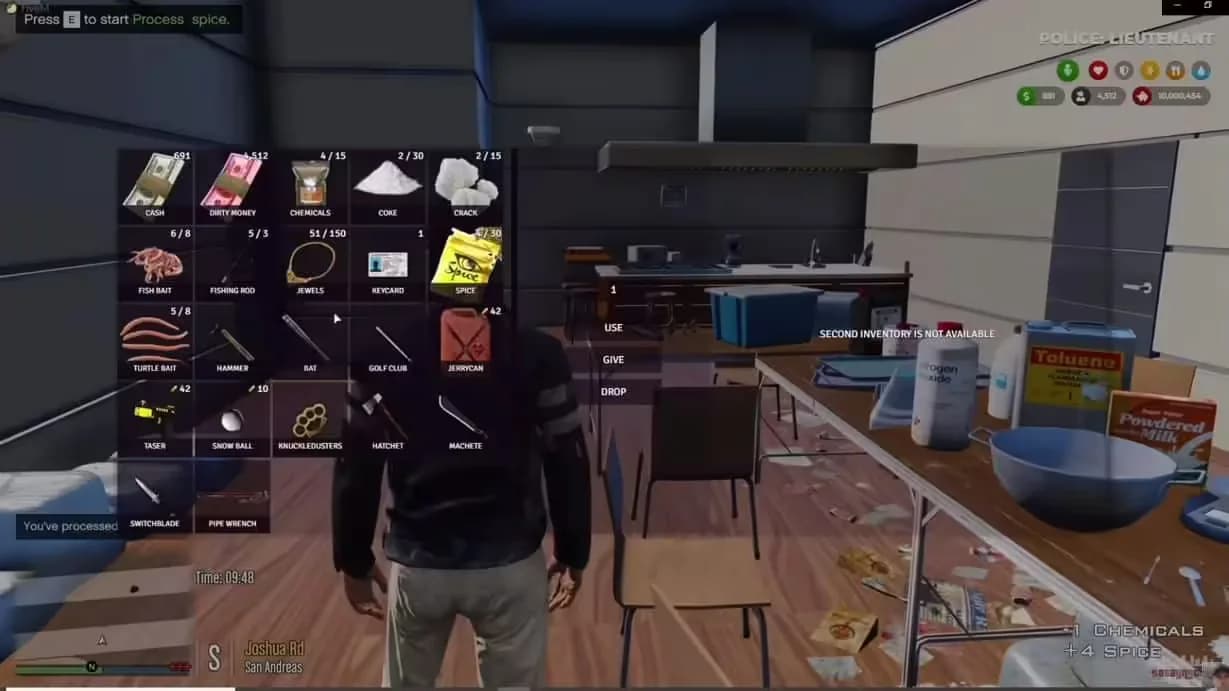
A well-built HUD touches five core surfaces: status indicators (health, armor, stamina, hunger, thirst, stress, oxygen), the minimap or radar replacement, currency displays (cash, bank, black money depending on your framework), notification overlays for server events and framework callbacks, and player identity elements — name tags, player IDs, job and gang labels, voice activity indicators. Because the HUD bridges so many server subsystems, its failure modes are equally broad. A HUD that works flawlessly during testing can break the moment it tries to read status data from a framework it was not built for, or the moment another UI resource starts competing for the same NUI render layer.
Why HUDs break in FiveM usually traces back to one of six root causes. First, overlapping UI elements — two resources both calling SetNuiFocus(true, true) or fighting over z-index values inside the NUI DOM. Second, framework status system conflicts — the HUD expects esx_status:getStatus but your server runs QBCore, or the HUD uses QBCore.Functions.GetPlayerData while your status module exposes values through a custom export. Third, NUI callback failures — the Lua client sends SendNUIMessage correctly, but the JavaScript or HTML inside the HUD never receives it because the window.addEventListener('message') handler is not registered or the event data structure does not match what the HUD expects. Fourth, resource load order — the HUD starts before the framework it depends on, so all its export calls return nil. Fifth, CSS conflicts — unstyled or leaked stylesheets from other resources pollute the HUD's container, causing elements to render off-screen, at zero opacity, or behind other NUI layers. Sixth, missing build artifacts — many modern HUDs ship as source code (React, Vue, Svelte, or plain HTML/CSS/JS tooling) and require a build step inside the resource folder. If the built output in ui/ or web/dist/ does not exist, the ui_page directive in fxmanifest.lua points at nothing and the HUD silently fails.
The good news is that HUD failures are almost never random. They follow predictable patterns determined by your framework, your resource list, and how you configured server.cfg. This guide walks through the twelve HUD failure modes that appear most often on ESX, QBCore, and QBox servers. Each section covers how to diagnose the issue, the fix that solves it 90% of the time, and the trap that causes the remaining 10%.
Quick Diagnosis Table
Frequently Asked Questions
Why is my FiveM HUD invisible or not showing?
An invisible HUD is almost always a NUI rendering failure or a missing build step. Open the F8 console, look for errors containing 'NUI' or 'Could not find resource ui page', then verify the HUD has a built ui/ or web/dist/ directory and that fxmanifest.lua points at the right ui_page. Also confirm the HUD starts after your framework in server.cfg.
Why is the minimap not displaying correctly with my custom HUD?
Most custom HUDs call DisplayRadar(false) to hide the default minimap and render their own. If the minimap disappears entirely, the HUD is hiding it without providing a replacement. Either enable the HUD's custom minimap in its config, or force the default back with DisplayRadar(true) to test whether the HUD is the cause.
Why is the speedometer not working in my HUD?
Speedometers read from GetEntitySpeed() on the client. If speed stays at zero, check (1) the player is actually in a vehicle when the value reads, (2) the HUD converts raw m/s to km/h or mph correctly (multiply by 3.6 for km/h, 2.237 for mph), and (3) the NUI message bridge is actually sending updates — a print statement in Lua confirms the native works even if the HUD silently fails.
Why are health and armor bars showing wrong values?
Wrong health and armor values usually mean the HUD polls GetEntityHealth() and GetPedArmour() too slowly, or caches stale values. Poll every 200–500ms. Anything slower misses rapid changes during combat. Anything faster (every frame) destroys FPS.