Best FiveM Inventory Scripts 2026: Complete Comparison Guide
The best FiveM inventory scripts in 2026 are ox_inventory as the free open-source default, qs-inventory as the polished premium alternative around 35 to 50 USD, qb-inventory as…
Hinweis: Dieser Artikel verlinkt auf Produkte, die bei FiveMX verkauft werden. Die Produktreihenfolge basiert auf redaktioneller Bewertung, nicht auf bezahlter Platzierung.

The best FiveM inventory scripts in 2026 are ox_inventory as the free open-source default, qs-inventory as the polished premium alternative around 35 to 50 USD, qb-inventory as the legacy QBCore-only choice, and codem-inventory as a mid-priced option around 30 USD. ox_inventory ranks first because it runs on QBCore, ESX, and QBOX through a single bridge, ships with full item metadata, slot-plus-weight inventories, weapon attachments, container stashes, and benchmarks at 0.08 ms idle on a 64-player server. qs-inventory is the right choice when visual polish and built-in crafting matter more than the lowest possible resmon impact. qb-inventory still ships with QBCore but is replaced on most modern builds. The four scripts compared in this guide cover every realistic FiveM inventory decision in 2026.
Why does the FiveM inventory script choice matter so much in 2026?
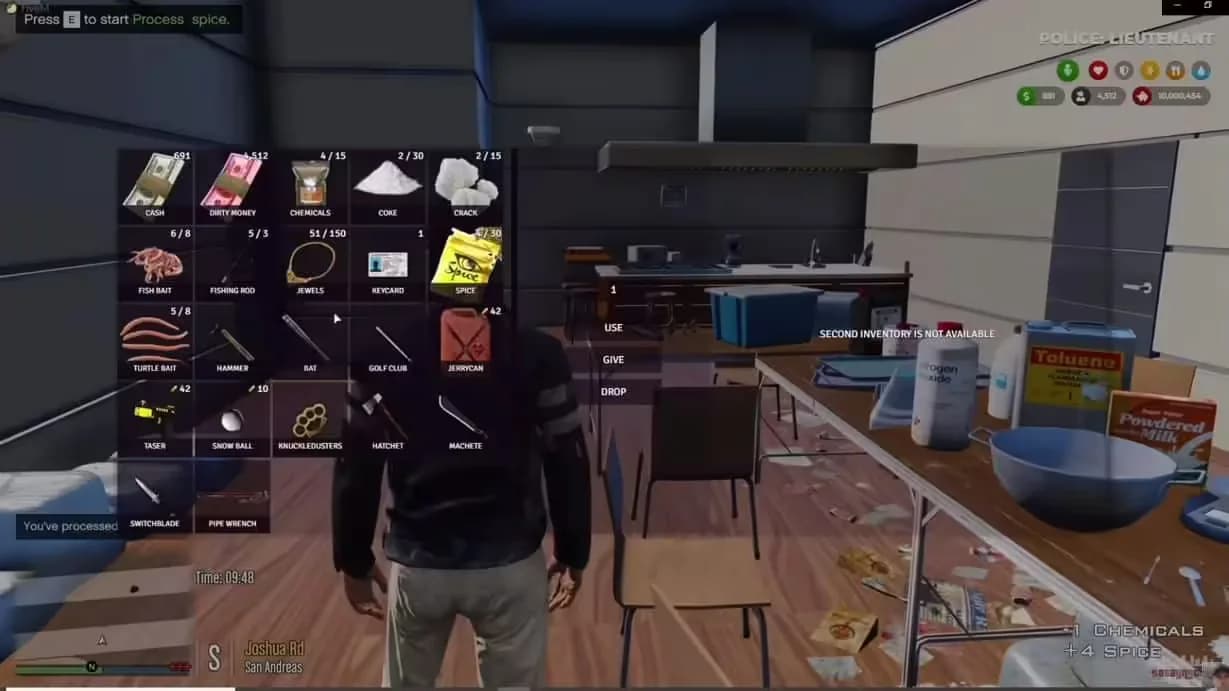
The FiveM inventory script choice in 2026 matters because the inventory is the single resource that touches nearly every other script on the server. Jobs call inventory exports to give and take items. Shops use it for every transaction. Drug systems, crafting, housing stashes, vehicle trunks, and key systems all interface with inventory through metadata and exports — there is no isolated way to use one. A poorly optimized inventory adds milliseconds to every player interaction, and at 100 players a 0.40 ms gap compounds into 40 ms of extra server tick time per cycle. Switching inventory scripts later is also expensive: every dependent resource needs its export calls rewritten, every custom item needs to be redefined, and every player stash and vehicle trunk has to be migrated. The right choice up front avoids weeks of rewrites later, which is why ox_inventory has become the de facto default.
Key takeaways:
- A FiveM inventory script touches every job, shop, drug, housing, and vehicle script on the server.
- A FiveM inventory script's resmon impact compounds with player count and tick frequency.
- A FiveM inventory script switch later requires rewriting export calls in dozens of resources.
- ox_inventory is the de facto FiveM inventory default in 2026 because it runs on QBCore, ESX, and QBOX.
- The FiveM inventory choice up front is one of the highest-leverage decisions a server owner makes.
What are the major FiveM inventory scripts compared in 2026?
The major FiveM inventory scripts in 2026 are ox_inventory, qs-inventory, qb-inventory, and codem-inventory, and the comparison breaks down on price, framework support, and feature depth. ox_inventory is free, framework-agnostic across QBCore, ESX, and QBOX through its bridge, and benchmarks at 0.08 ms idle and 0.35 ms during active trading on a 64-player server. qs-inventory costs around 35 to 50 USD, runs on QBCore and ESX, ships with built-in crafting and the most polished UI of the four, and benchmarks at 0.15 ms idle. qb-inventory is the free default that ships with QBCore, runs only on QBCore, and benchmarks at 0.22 ms idle with limited metadata support. codem-inventory costs around 30 USD, runs on QBCore and ESX, and adds weapon-wheel and clothing-system integration. ox_inventory is the right starting point for almost every new server in 2026.
Key takeaways:
- ox_inventory is free, runs on QBCore, ESX, and QBOX, and benchmarks at 0.08 ms idle.
- qs-inventory is paid, runs on QBCore and ESX, and ships with built-in crafting and the best UI.
- qb-inventory is the legacy QBCore default and is now outperformed by ox_inventory on every metric.
- codem-inventory is a mid-priced QBCore and ESX option with weapon-wheel and clothing integration.
- The ox_inventory bridge to QBOX makes it the safest 2026 choice for servers that may switch frameworks.
ox_inventory
Framework: Universal (ESX, QBCore, QBOX via ox_core)
Price: Free (open source)
Developer: Overextended
ox_inventory has become the de facto standard for modern FiveM servers. It's part of the OX ecosystem and integrates effortlessly with ox_lib, ox_target, and QBOX. The full source code and documentation live at the ox_inventory GitHub repository.
Strengths:
- Excellent performance (one of the lightest inventory scripts available)
- Framework-agnostic via bridge system
- Slot + weight hybrid system
- Built-in weapon attachments, durability, and metadata
- Active development with frequent updates
- Strong community support and documentation
- Container system (trunks, stashes, gloveboxes)
Weaknesses:
- Requires ox_lib as dependency
- Migration from older inventories requires data conversion
- UI is functional but not the most visually polished
Best for: New servers starting fresh, servers migrating to QBOX, anyone who values performance and long-term support.
qs-inventory
Framework: QBCore, ESX
Price: Premium (paid, ~$35-50)
Developer: Quasar Store
qs-inventory is a paid alternative focused on visual design and UI polish. It is part of the broader Quasar Store ecosystem alongside qs-hud, qs-housing, and other Quasar resources.
Heads up: Quasar Store has a mixed reputation for post-sale support and stability on populated servers. Research recent buyer feedback before committing to the ecosystem.
Strengths:
- Beautiful, modern UI design
- Drag-and-drop with smooth animations
- Hotbar with keybinds
- Crafting system built-in
- Extensive configuration options
- Active commercial support
Weaknesses:
- Paid (higher upfront cost)
- Slightly heavier on resources than ox_inventory
- Vendor lock-in with Quasar ecosystem
Best for: Servers that prioritize visual polish and are willing to pay for premium support.
qb-inventory (Default QBCore)
Framework: QBCore
Price: Free (included with QBCore)
Developer: QBCore Framework
The default inventory that ships with QBCore. Functional and widely supported, but showing its age.
Strengths:
- Zero setup (comes with QBCore)
- Maximum compatibility with QBCore resources
- Familiar UI for QBCore players
- Large community with available support
Weaknesses:
- Outdated UI design
- Performance lags behind modern alternatives
- Limited metadata support
- Less feature-rich than dedicated inventory scripts
Best for: QBCore servers that want simplicity and maximum compatibility without extra setup.
Core Inventory (codem-inventory)
Framework: QBCore, ESX
Price: Premium (paid, ~$30)
Developer: Codem
Strengths:
- Clean, modern interface
- Weapon wheel integration
- Clothing/outfit system built-in
- Good performance profile
Weaknesses:
- Paid
- Smaller community than ox_inventory or qs-inventory
ESX Default Inventory
Framework: ESX
Price: Free
Developer: ESX Framework
The legacy weight-based inventory system. If you're running ESX and haven't upgraded, this is what you have.
Verdict: Replace it. The ESX weight inventory has known issues and is significantly outperformed by ox_inventory (which supports ESX natively). See the ESX Legacy guide for the full modernization path.
Comparison Table
| Feature | ox_inventory | qs-inventory | qb-inventory | codem-inventory | |
Häufig gestellte Fragen
Can I use ox inventory with QBCore?
Yes. ox inventory supports QBCore natively through its bridge system. Most QBCore resources work without modification.
Does the inventory affect server performance?
Significantly. The inventory script runs on every player interaction. A poorly optimized inventory adds milliseconds to every action, which compounds with player count. Use resmon to measure impact.
Should I use a free or paid inventory?
ox inventory (free) outperforms most paid alternatives in features and performance. Pay for an inventory only if its specific features (UI design, built-in crafting) are worth the cost to you.