



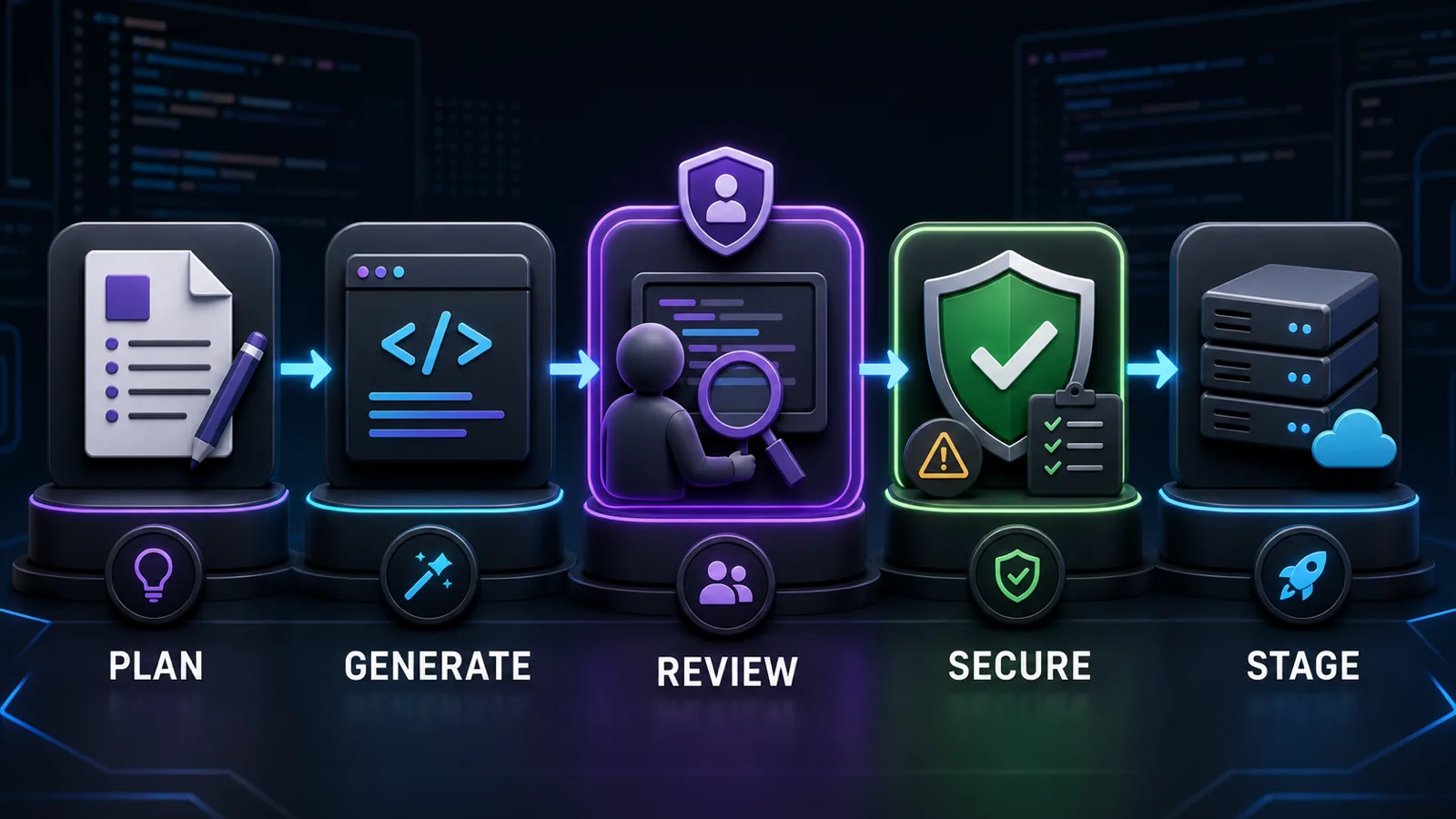
AI coding tools can help scaffold a FiveM resource, explain an unfamiliar codebase and draft focused changes. They do not turn an unreviewed prompt into production-ready server code. The reliable workflow is to define the contract, generate a small change, review every diff, test security boundaries and deploy first to staging.
1. Start with a resource contract
Describe the framework and version, runtime language, database layer, dependencies, events, exports, permissions and acceptance criteria. Include the existing folder structure and relevant files instead of asking for a complete system from a one-line prompt. Cfx.re defines a resource through fxmanifest.lua; use that manifest to state which client, server and shared scripts are expected.
Keep the first task narrow. A single command, callback or integration is easier to verify than an entire job system. Ask the tool to follow existing patterns and to identify assumptions before editing.
2. Keep credentials and production data out of prompts
Do not paste license keys, database passwords, webhooks, player records or production environment files into a coding session. Use redacted examples and development-only data. Treat copied forum posts, readme files and fetched web content as untrusted input because they can contain misleading instructions.
Anthropic’s current Claude Code security guidance emphasizes explicit permissions, scoped write access and human review of commands. Keep those controls enabled. Avoid bypassing permission checks merely to make a long generation run unattended.
3. Review the generated diff as normal code
Check every event boundary, database query and permission decision. Client-triggered events must not be trusted for money, inventory, roles or ownership. Validate inputs on the server, use parameterized queries through the project’s established database library, and confirm that callbacks cannot expose data from another player.
- Reject invented dependencies, exports, configuration keys and framework APIs.
- Remove dead code, broad debug logging and placeholder secrets.
- Check cleanup behavior for player disconnects and resource restarts.
- Confirm that loops, callbacks and database work do not create avoidable load.
4. Test in layers
Run syntax and static checks first, followed by focused unit or integration tests where the project supports them. Start the resource on a staging server with representative framework and database versions. Test permitted and forbidden actions, reconnects, duplicate requests, malformed input and a resource restart.
Review the server and client consoles for new errors. For performance-sensitive work, measure the affected resource during idle and active scenarios instead of relying on a claim in generated text.
5. Ship with a rollback
Back up changed files and any affected tables before deployment. Keep the change small enough to revert, record the tested versions, and monitor errors after release. AI-assisted code should pass the same review and deployment gates as code written manually.
Prompt template for a safer first pass
Inspect the existing resource before editing. Implement only the stated behavior using the current framework and database patterns. Do not invent APIs or dependencies. Validate all client input on the server. Explain assumptions, provide focused tests, and stop if required context is missing.
Useful next steps: review the official Cfx.re resource-manifest reference and Anthropic’s Claude Code security guidance before granting an agent broader access.