The matching public source for this New Leaf-inspired HUD is livened/NewLeafHUD. Its resource directory is cyvixHUD and the manifest names Cyvix as author. The manifest loads ox_lib, while the client reads hunger and thirst through esx_status. This is not evidence of ready-made QBCore compatibility.

PC-INFOHUD is Procastinator’s QBCore information HUD. The README instructs you to name the resource proc-infohud and start it with ensure proc-infohud; the repository name alone is not the installation name. The manifest serves html/index.html, html/app.js and html/styles.css.

ApolloStudios-TwitchIntegration provides an in-game browser interface for Twitch integration. In its client code, the twitch command gives the interface mouse and keyboard focus and sends ShowEverything. The stopUIControl callback releases focus. Those paths are the starting point for checking how players open and close the interface.

Install ScubeScripts sc_textUI with its actual client exports and server events, then test prompt cleanup and translated text.

Set up CSYON’s RLO HUD with ESX Legacy and esx_status. Check the required status event, job icons, postal routing and known initialization limits.
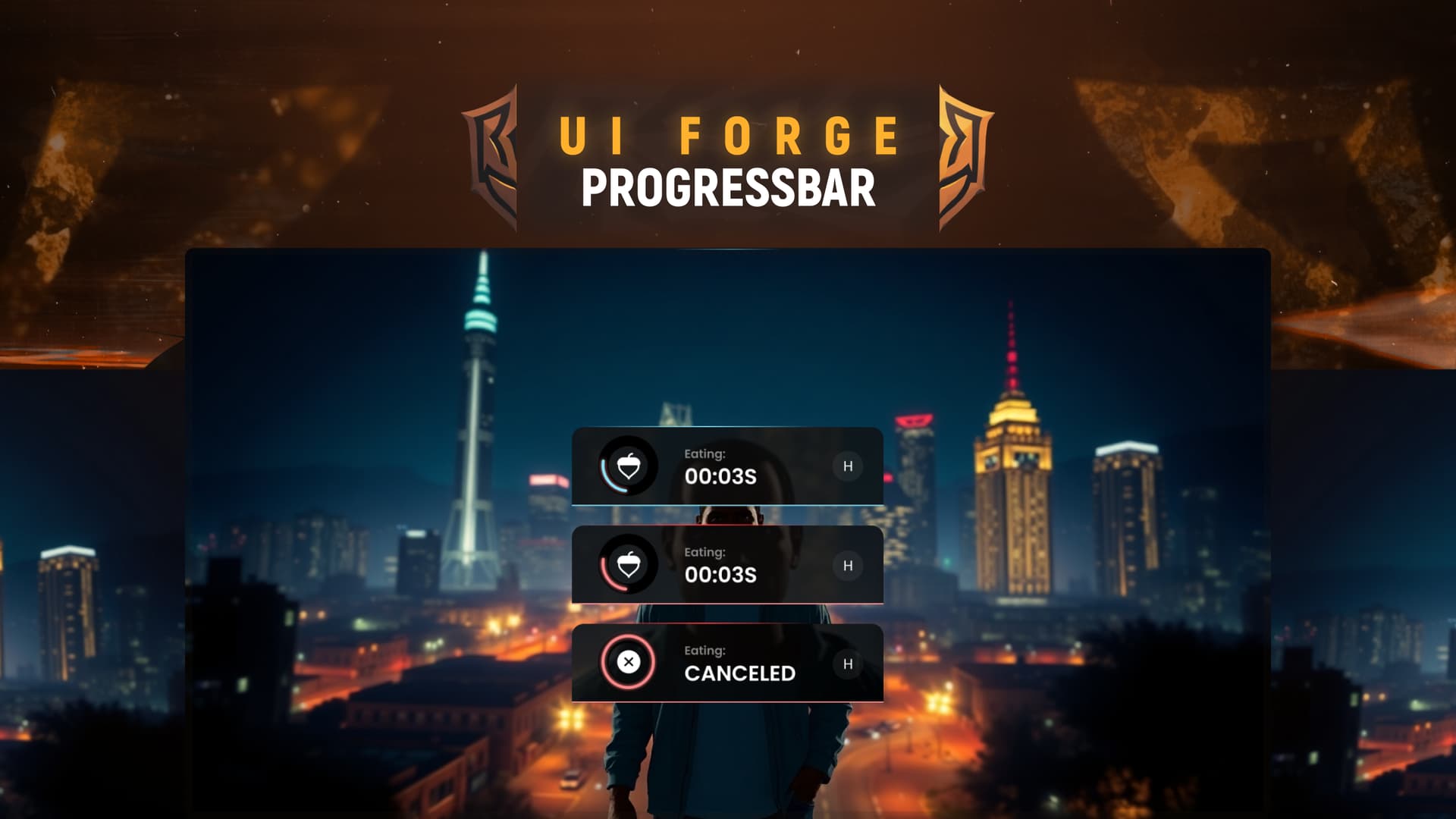
UIForge Progressbar is a FiveM progress interface with client-side control, animation and prop handling. Its client code distinguishes movement, vehicle movement, mouse and combat restrictions. Read the actual exported functions in client/main.lua before integrating it into an existing action.
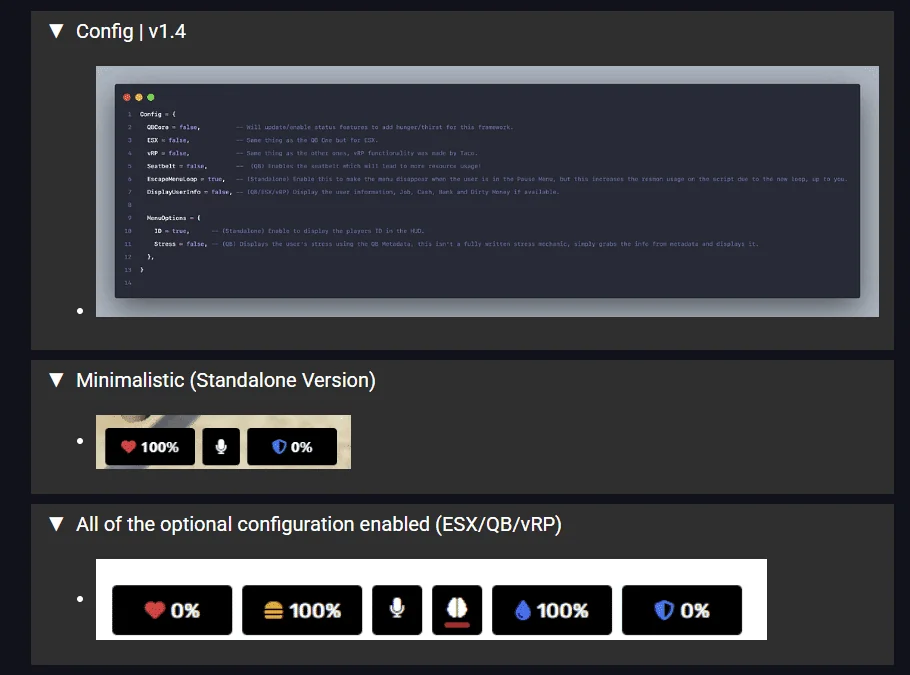
Original V-HUD setup: install the compiled 1.45 release, select framework features and distinguish status displays from gameplay mechanics.
Identify Dre_Dre’s OC HUD V2, check its original ESX dependencies and confirm current distribution before installing.
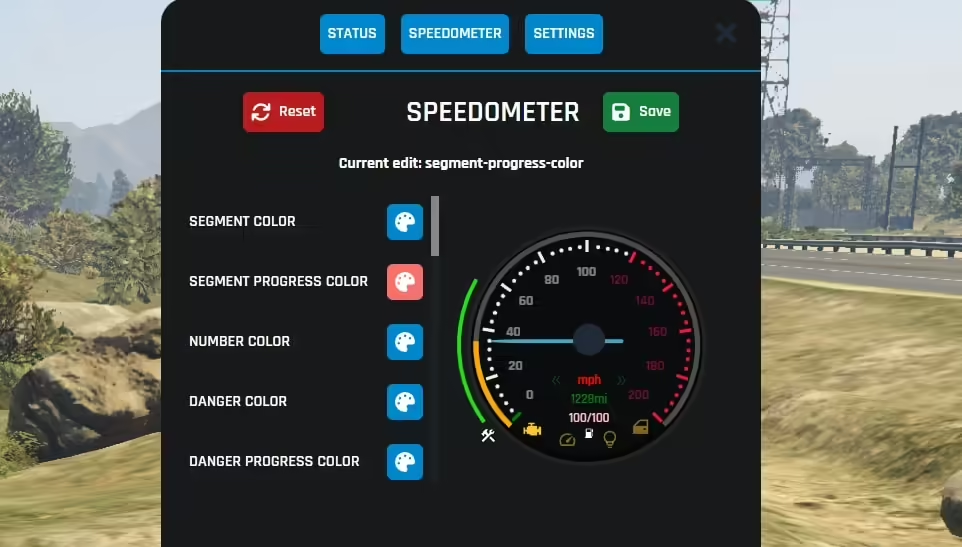
Install the identified ESX HUD fork with its actual dependencies, fuel integrations and web build requirements.
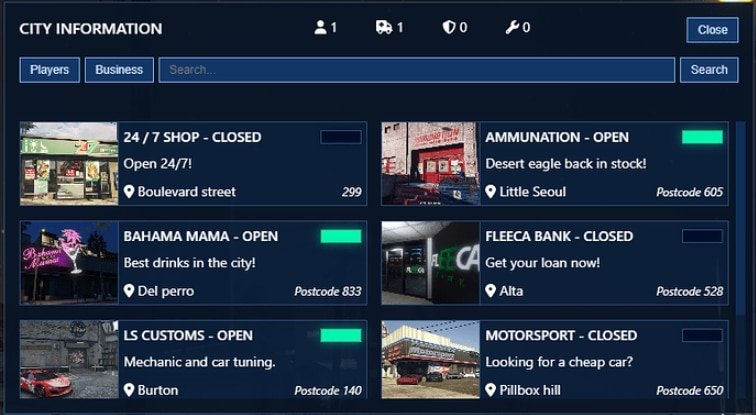
Install the identified sf-scoreboard resource with its SQL schema, identifier configuration and business-permission checks.
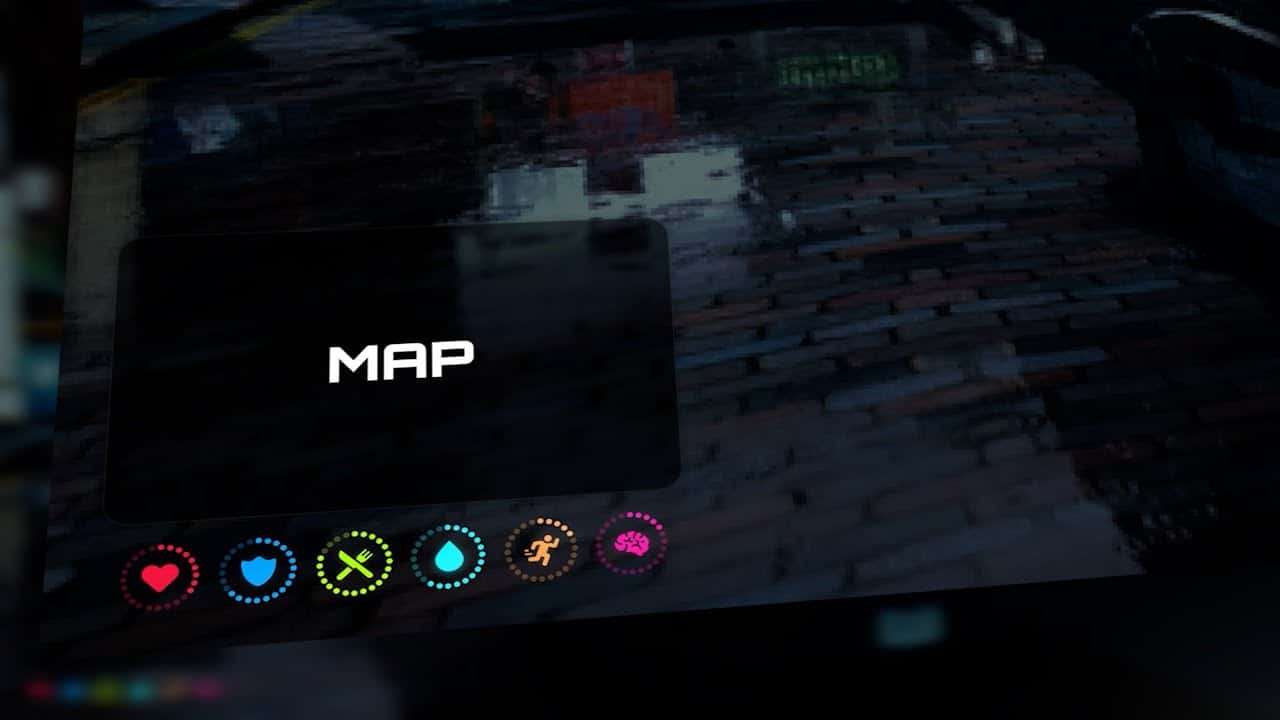
Get UZ Scripts’ Pure HUD from its creator and check framework selection, interface files, fuel display and player-state values before launch.

Find the original discontinued Trew HUD, choose its ESX or vRP folder and check dependencies, status exports and voice integration before use.
How to install a free FiveM HUD safely
Verify framework support
Check whether the HUD targets ESX, QBCore, Qbox, or Standalone servers. Look for the exact framework version and integration method; similar event or export names do not guarantee compatibility.
List every dependency
Identify UI libraries, inventory or status resources, database tables, voice integrations, and framework bridges before deployment. Install them in the documented order and keep their configuration separate from the HUD’s defaults.
Back up and configure
- Back up the current HUD resource, configuration, and database.
- Install the new HUD under a unique resource name on staging.
- Configure units, status providers, permissions, key bindings, and localization.
- Disable the old HUD only after the new one starts without console or client errors.
Test the complete interface
Check different resolutions, aspect ratios, UI scaling, vehicles, voice status, player needs, job states, and reconnects. Verify keyboard navigation and readable contrast where the resource exposes those controls. Roll back if the HUD hides critical information or conflicts with another interface.