




SERVER PACK BUYING GUIDE
Choose the base that fits your project
Compare the framework, the work involved and the current price before choosing your server files.
Start with the essentials
A server pack supplies files, not a hosted server. Choose a framework your team can maintain, budget for hosting and leave time for configuration and testing.
- Choose hosting and register your Cfx.re server key.
- Check the package notes, database requirements and resource dependencies.
- Configure and test privately before inviting players.
Compare the three starting points

Older QBus · developer option
QBus / QBCore Full Server v4.1
For developers comfortable reviewing an older stack and planning migration work.
- Included
- QBus v4.1 resource archive using the ghmatti database layer.
Setup and adaptation
Older QBus, not a current QBCore distribution. Review SQL, dependencies and resource order; migration is required for a current QBCore project.
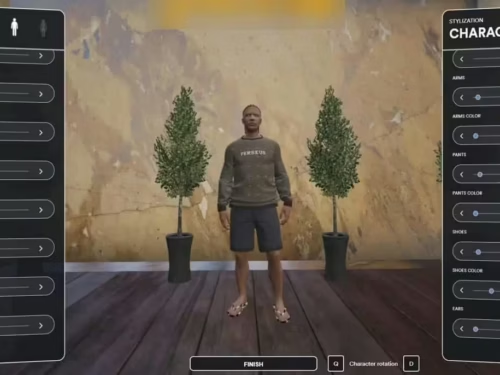
ESX-Legacy · server base
ESX Pro Server Template
For teams choosing an ESX-Legacy base and planning their own configuration.
- Included
- ESX Pro V26 archive containing server resources, configuration and SQL files.
Setup and adaptation
Review the supplied SQL and resource configuration, then test the dependencies on your chosen server.
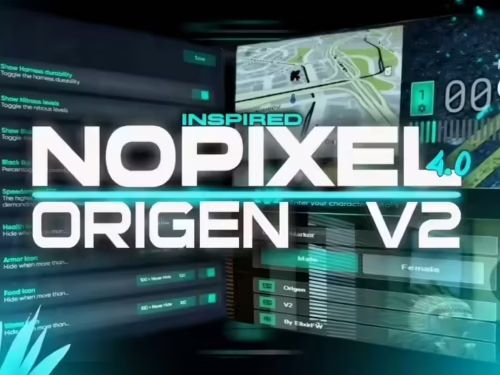
QBCore · ORIGEN V2
NoPixel 4.0 (QBCore) ORIGEN V2
For teams comparing the ORIGEN V2 package for a QBCore project.
- Included
- ORIGEN V2 server archive listed for QBCore.
Setup and adaptation
Inspect the archive, identify its dependencies and validate your configuration before deployment. A current-framework or ready-to-launch guarantee is not implied.
Server pack buying guide
Compare downloadable FiveM server packs by framework, current price and package type.
Start with ESX or QBCore, compare the current options and choose the server base that fits your project and budget.
Compare the current server-pack routes
| Route | Packs | Use it when |
|---|---|---|
| All server packs | 30 | Browse the full server-pack catalog. |
| ESX server packs | 10 | Choose an ESX base for an ESX-oriented build. |
| QBCore server packs | 17 | Choose a QBCore base for a QBCore-oriented build. |
The counts above cover the currently published, visible, in-stock, paid and downloadable products in each category. Open a product page to compare its current price, package contents and setup requirements.
Inspect the current catalog
Use the framework routes above to browse current products, then open each product for its package details, setup notes and price.
How to choose your server pack
1. Choose ESX or QBCore first
A visual style is not a framework. Choose the framework your team can maintain and that matches the scripts you plan to add. If you already depend on ESX resources, compare the ESX route. If your planned stack is QBCore, stay on the QBCore route.
2. Compare package, price and style
- Use the product video and gallery to compare the look and included systems.
- Compare the current package type, price and customer reviews.
- Choose an established lower-priced base or a premium package according to your budget.
3. Make the base your own
A server pack gives you a faster starting point. Add your server name, branding, preferred jobs and integrations to turn the selected base into your own city.
When building your own stack is the better choice
Build from individual resources when you can already name the exact systems you need, your team understands their dependencies and you want control over every update. Choose a pack when reducing initial selection and integration work is worth more than removing or replacing bundled parts later.
Server pack questions
Does a server pack include hosting?
No. A product supplies the downloadable files described on its page. You still need suitable hosting, FXServer artifacts, database access and your own configuration.
Can I customize a server pack?
Yes. Server packs are starting points that you can adapt with your branding, configuration and compatible resources.
Which framework should I choose?
Choose the framework your team can maintain and that matches the scripts you intend to use. Do not infer framework compatibility from screenshots or a NoPixel-inspired visual style.
How do I compare the current options?
Compare framework and catalog size in the table, then open each product page for its current price, package details, media and reviews.