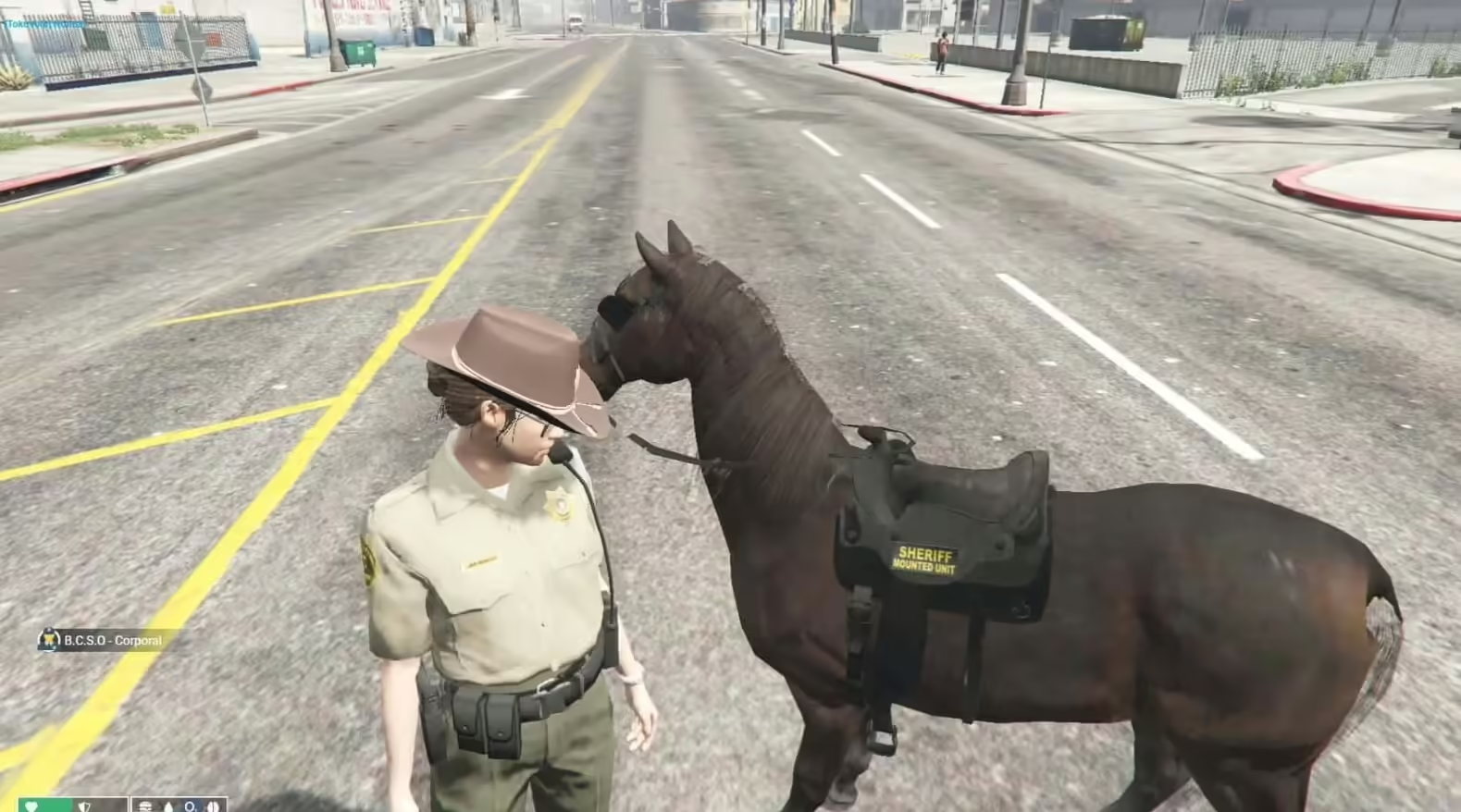
8 imagens do produto disponíveis.
Compatibilidade:
Wasabi MDT & Dispatch
Wasabi MDT & Dispatch - professional ESX script with custom features and optimized performance for FiveM servers. Compatible with ESX framework.
Acesso Instantâneo
8 imagens do produto disponíveis.
Wasabi MDT & Dispatch - professional ESX script with custom features and optimized performance for FiveM servers. Compatible with ESX framework.
Use os dados publicados nesta página para confirmar se Wasabi MDT & Dispatch é compatível com seu servidor antes do checkout.
esx, qbcore, qbox, standalone
Publicado nesta página
Disponível
Cartão, Klarna e carteiras compatíveis via Stripe. Outros métodos locais podem aparecer quando disponíveis na sua região.
Expectativa de suporte
O suporte cobre acesso ao download, arquivos entregues que estejam faltando e dúvidas com base nas notas de instalação publicadas.
Instalação personalizada, conversão de framework, configuração em servidor ao vivo e trabalho em recursos personalizados não estão incluídos, salvo quando indicado na página do produto.
Pergunte antes de comprar se seu servidor usa recursos de framework, inventário ou banco de dados muito modificados.
Use esta checklist para decidir rapidamente se o recurso combina com seu servidor, framework e expectativas de suporte.
Ganho para o administrador
Wasabi MDT & Dispatch foi posicionado para reduzir Police Scripts, em vez de você reconstruir o mesmo sistema do zero.
Compatibilidade
Funciona com esx, qbcore, qbox, standalone. Verifique o bloco de requisitos antes de usar em um servidor ativo.
Confiança na compra
Download instantâneo, checkout Stripe, acesso ao suporte e contexto de reembolso são exibidos antes do pagamento.
Elementos de decisão
Requisitos, detalhes de instalação, Vídeo de pré-visualização, Perguntas do Produto
Running law enforcement on a FiveM server without proper tools is chaos. Officers can't share information, dispatchers are juggling voice chat, and nobody has access to criminal records when they actually need them. Wasabi MDT & Dispatch solves all of that with a professional-grade system that combines records management, live dispatch, unit tracking, and department communications in one cohesive package.
https://www.youtube.com/watch?v=yBEcHtWxtvQThis is the complete law enforcement infrastructure for serious roleplay servers. Officers get a full MDT (Mobile Data Terminal) with searchable databases for persons, vehicles, incidents, and warrants. Dispatchers see real-time unit locations, active calls, and can assign officers to situations with live updates. Departments can manage rosters, case files, and evidence logs all from one interface.
The UI is clean and professional - looks like actual police CAD systems, not a video game menu. Everything is accessible via hotkeys while on duty, with responsive design that works on all screen sizes. And it integrates with your existing framework (ESX, QBCore, or custom) without replacing core systems you've already got working.
Officers open the MDT (default keybind while in a vehicle or at a computer) and get a dashboard showing active calls, unit status, and recent alerts. From there they can search persons by name or ID, pull up vehicle plates, check for active warrants, or file new incident reports.
Example: Officer stops a vehicle. They run the plate in the MDT, it returns the registered owner plus any flags (stolen, linked to warrants, BOLO match). They run the driver's name, see two prior arrests for drug possession and an active warrant for failure to appear. All this happens in seconds without radioing dispatch or asking admins for info.
Dispatchers see a live map with all unit locations and status. When a 911 call comes in, it appears on their screen with location, caller info, and call type (robbery, medical, traffic). They can assign the nearest available unit, who receives the call details on their MDT automatically.
Units can update their status (10-8 available, 10-6 busy, 10-23 arrived on scene) from the MDT or via radio commands. Dispatch sees these updates in real-time and can coordinate multi-unit responses or reallocate resources as situations develop.
Every interaction can be documented. Officer arrests someone? They create a person record (if new) or update existing with mugshot, charges, and arrest report. Vehicle stops get logged with plate, VIN, make/model, and any violations or warnings issued.
Over time, this builds a comprehensive database that makes investigations possible. Looking for a serial robber? Search incident reports for modus operandi. Trying to link suspects? Check known associates. Need to find a frequently stolen vehicle type? Query the vehicle database. It's CSI-level functionality for roleplay.
Supervisors can issue warrants from the MDT with offense details, bail amount, and special instructions. Once active, that person is flagged in every MDT search. Officer runs their name at a traffic stop? Instant notification of the active warrant. Automatic integration means fewer criminals slip through cracks.
Warrants can be marked served when executed, with arrest details and booking officer logged automatically. This creates accountability and a complete paper trail for the judicial system if your server has court RP.
Running multiple agencies? Each department can have separate databases with controlled sharing. LSPD sees their cases, BCSO sees theirs, but both can access shared regional records like vehicle registrations and active warrants. Command staff can have cross-department access for oversight.
This mirrors real law enforcement data sharing and prevents meta-gaming while enabling cooperation when storylines require it.
Officers can attach evidence items to incident reports - seized drugs, weapons, documents, photos. The evidence locker tracks chain of custody, so you know who collected it, when, and where it's stored. For servers with court RP, this provides the documentation defense attorneys and prosecutors need.
Case files can link multiple incidents to track ongoing investigations. Follow a drug trafficking ring through multiple stops, seizures, and arrests - all connected in one case file with a primary investigator and supporting officers documented.
Dispatcher or supervisor issues a BOLO for a suspect vehicle (say, red sports car last seen fleeing a robbery). Every officer gets that alert on their MDT. If any unit runs a plate matching the description, the MDT highlights it automatically. Collaborative policing through information sharing.
BOLOs can include photos, last known locations, armed/dangerous flags, and vehicle descriptions. They stay active until manually cleared, ensuring all shifts are aware of ongoing situations.
Wasabi MDT isn't just a script - it's the future of FiveM roleplay infrastructure. Most MDT systems give you basic record keeping. This gives you a complete CAD system rivaling what real departments use. The difference is night and day for immersion and operational capability.
The polish is evident everywhere. Smooth animations, intuitive UI, fast database queries, zero lag during high-traffic situations. It's production-ready out of the box but flexible enough to customize for your specific department structure and roleplay style.
911 call comes in - armed robbery at a jewelry store. Dispatcher sees the call, checks unit availability on the map, and assigns three units. Officers receive the call on their MDT with location marker and description. They arrive, apprehend suspects, run their names - one has an active warrant, two have prior robbery arrests on file.
Lead officer creates an incident report, attaches seized weapons as evidence, links it to the active warrant, and books all three. The case file automatically includes victim statements from the 911 call, officer reports, evidence logs, and suspect histories. Prosecutor has everything needed without asking anyone for paperwork. That's the power of integrated systems.
Apenas os dados publicados nesta página devem ser considerados confirmados. Se você precisar de mais detalhes, revise a descrição, requisitos, histórico de alterações, avaliações e perguntas do produto antes do checkout.
Search and manage criminal records, vehicle registrations, active warrants, and incident reports from a professional in-vehicle terminal accessible via hotkeys while on duty
Real-time 911 call management with unit assignment, location tracking, and priority tagging for active situations displayed on dispatcher maps
Comprehensive records with mugshots, criminal history, known associates, vehicle registrations, and stolen vehicle flags searchable by name or ID
Create, assign, and track arrest warrants with offense details, officer notes, and automatic MDT flagging for officers conducting stops
See all active units on the map with callsigns, status updates (10-8, 10-6, etc.), and current assignments in real-time
0 perguntas
Sem Perguntas
Seja o primeiro a fazer uma pergunta!
Learn more about setting up, configuring, and using this type of resource.
Choosing a framework is the single most consequential decision when building a FiveM server. It determines which scripts you can use, how your developers write code, the…
FiveM frameworks form the backbone of roleplay servers. They're not just code libraries—they're complete systems that manage player identity, jobs, inventory, permissions,…
QBox has firmly established itself as the natural successor to QBCore in the FiveM roleplay ecosystem.
Use este produto como parte de uma configuração maior. Explore categorias relacionadas, frameworks alternativos, pacotes premium e downloads gratuitos complementares.