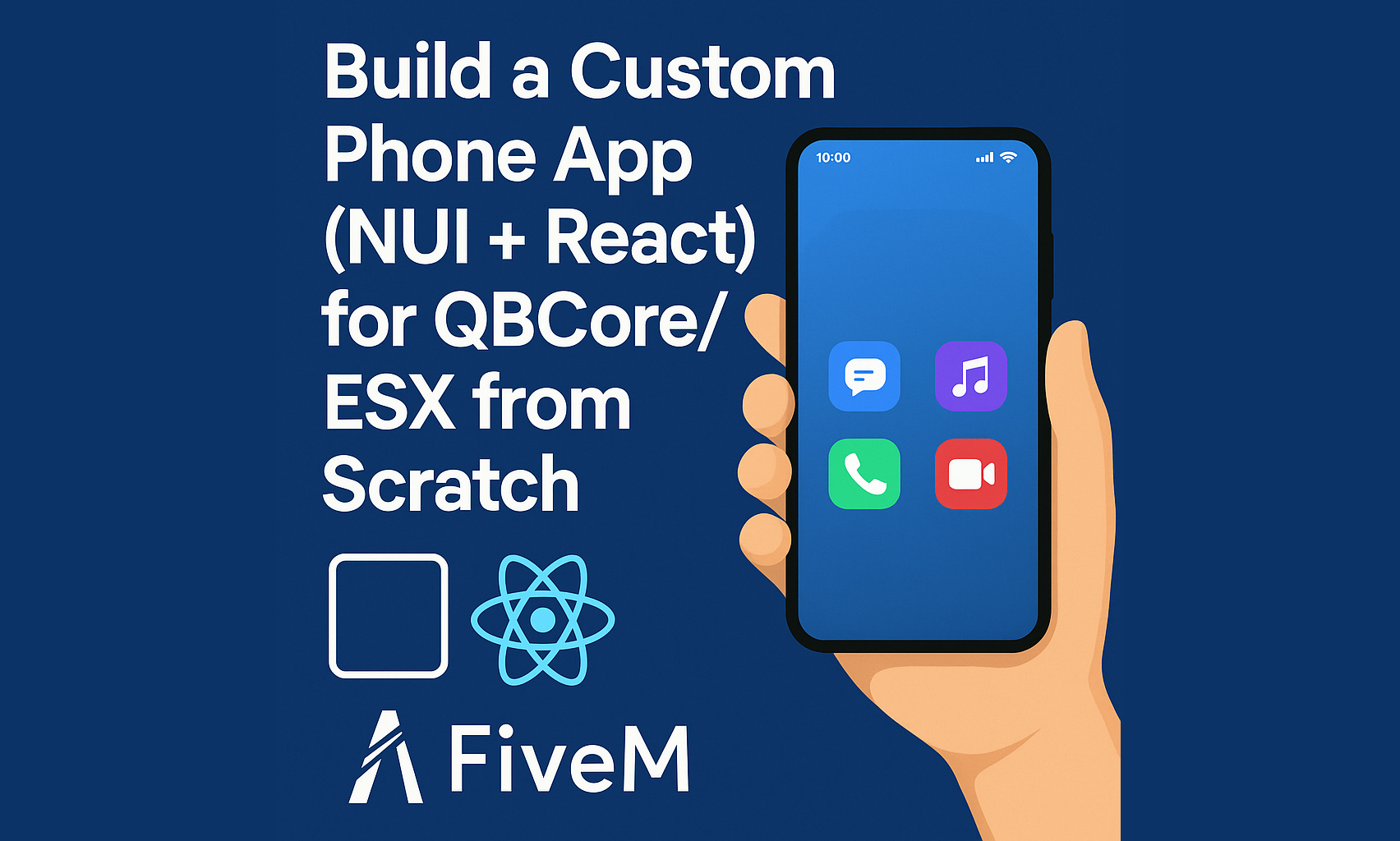
GoalCreate a production‑ready in‑game smartphone for FiveM using NUI + React. You will scaffold a resource, wire QBCore/ESX events, persist data in MySQL, and ship a smooth UI that respects performance budgets. Prerequisites Docs Internal reading (FiveMX) Architecture Event flow Step 1 — Scaffold the resource Folder layout fxmanifest.lua Step 2 — Create the React […]

Fast answer: FiveM servers remove the default GTA crosshair — HUD component 14, the reticle — by running HideHudComponentThisFrame(14) every frame in a client script. The call must run on the client, inside a loop, because HUD components render again on the next frame. Below: the copy-paste resource, an optional player toggle command, and fixes […]
A practical AI-assisted workflow for planning, generating, reviewing and testing FiveM scripts without shipping unsafe generated code.
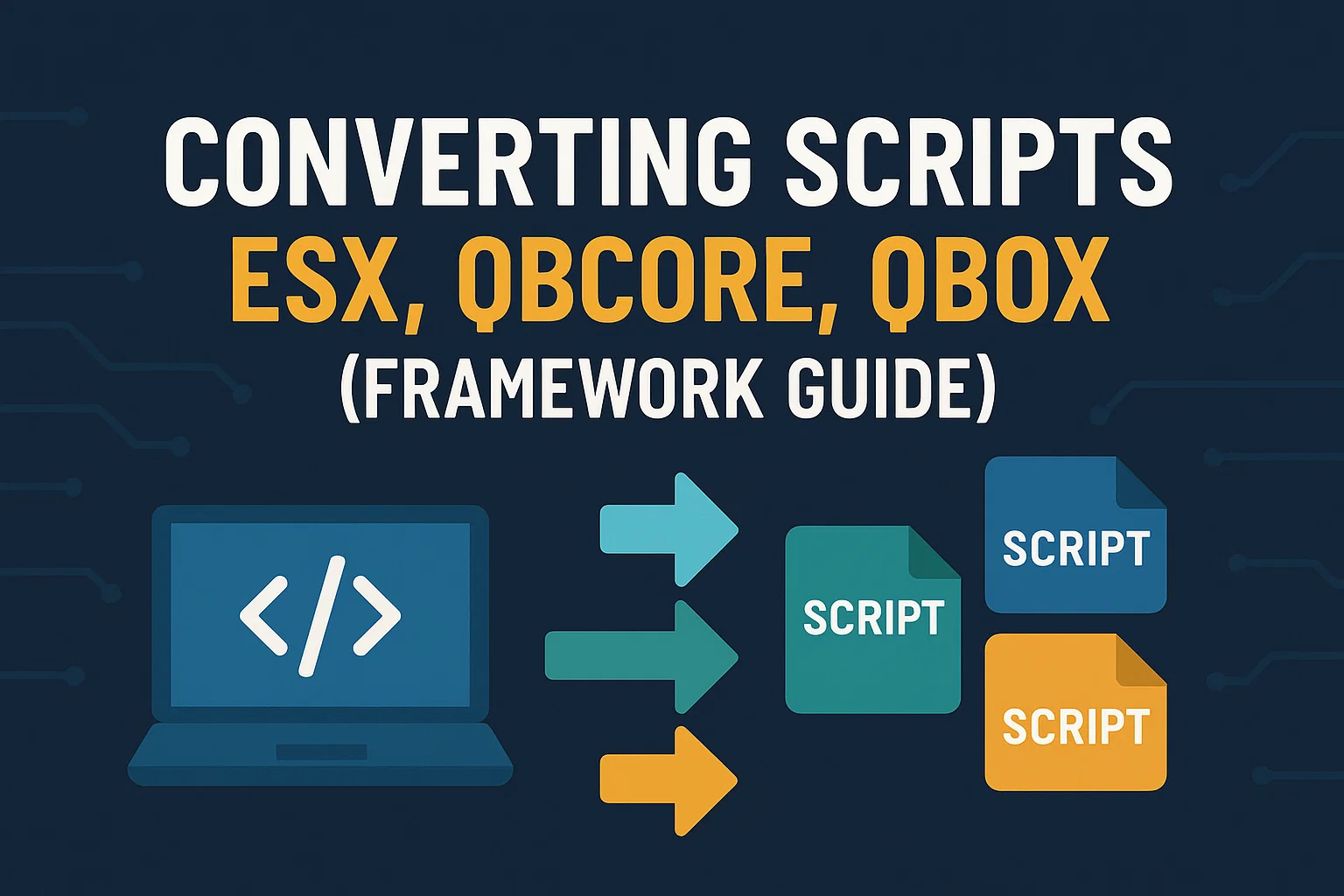
This is a code‑first, no‑fluff easy converting FiveM scripts guide that shows you exactly how to Convert FiveM Scripts between ESX, QBCore, QBOX (qbx_core), and framework‑agnostic (standalone) setups. You’ll get tri‑way API mappings, adapter code, SQL migration steps (mysql‑async → oxmysql), QBOX specifics, testing checklists, and production hardening tips. TL;DR — Migration in 10 Steps […]
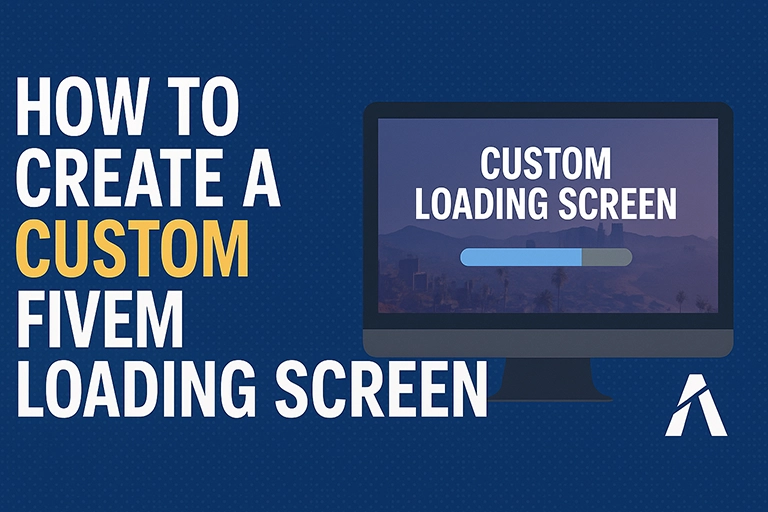
Okay, let’s review crafting a unique and engaging entry point for your players. We’re going to build a Custom FiveM Loading Screen from the ground up. What is a Loading Screen Resource? A custom loading screen is often the very first interaction a player has with your specific FiveM server. It’s a fantastic opportunity to […]
Fast answer: a FiveM driving school needs a DMV script, license logic, a test route, vehicles, instructor/admin handling, and clean integration with your framework’s player license data. Test license grants and failures before players use it live. Last updated: June 25, 2026 Okay, let’s review crafting the ultimate guide for setting up a compelling FiveM […]
Developing engaging and stable FiveM servers requires skill, creativity, and the right set of FiveM Development Tools. Having the proper toolkit can significantly streamline your workflow, boost efficiency, and open new possibilities. At FiveMX, we understand the challenges and complexities involved in bringing your FiveM vision to life. That’s why we’ve compiled this list of awesome […]
FiveM, a popular modification framework for Grand Theft Auto V, enables players to customize multiplayer servers with unique game modes, resources, and modifications. To bring these customizations to life, developers use several coding languages supported by FiveM, each with unique strengths and capabilities. This guide explores the primary coding languages used in FiveM development, provides […]
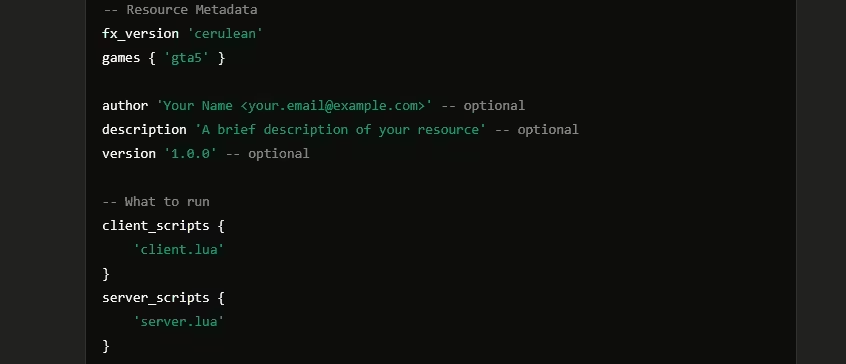
Fast answer: every FiveM resource needs an fxmanifest.lua file in the resource folder. It tells FXServer which game the resource supports, which scripts to load, and which files go to clients. Below are copy-paste examples for a standard script resource, shared/client/server scripts, NUI resources (ui_page + files), and maps (this_is_a_map ‘yes’ with ymap streams), plus […]
Customizing QBCore scripts is essential for adapting your FiveM server to meet specific requirements, enhancing gameplay, and offering a specific roleplay setup. This comprehensive guide will explore the process of customizing existing QBCore scripts, providing in-depth explanations, practical examples, and insights on how to align them with your server’s needs. It covers everything from basic […]
FiveM Real Time Sync keeps the in-game clock aligned with real-world time and includes start and stop controls.

Want a cleaner sky and faster gameplay on your FiveM server? Learn how to quickly disable the pesky AI planes and helicopters that clutter airports and boost performance—step‑by‑step, with a ready‑to‑use script!
This guide aims to introduce readers to LUA scripting within the context of FiveM, a popular modification framework for GTA V. We will cover the essentials of LUA, how it integrates with FiveM, and the steps required to set up a development environment using Visual Studio Code (VSCode). By the end of this post, readers […]